Residential License # 890459
Commercial License # 3667
Claim Your FREE Estimates Today!
Talk to an Expert
Residential License # 890459
Commercial License # 3667
Talk to an Expert

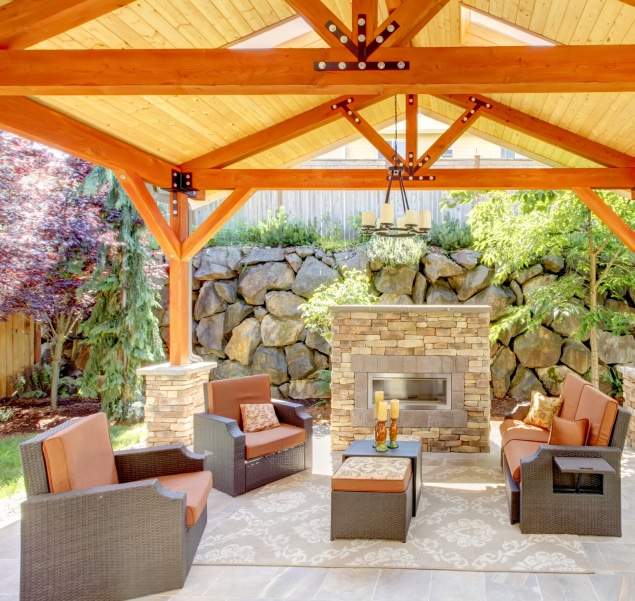
A gazebo or pavilion gives a New Orleans area yard a shaded place to sit, eat and gather. With strong sun, humidity, rain and mosquitoes to plan around, the design details that make one pleasant to use are practical ones: how the roof handles sun and rain, how air moves through the space, which fans and lights suit the spot, and whether screens keep insects out. These ideas focus on those choices. If you are still deciding between the two structures, start with our gazebo vs. pavilion comparison.

The roof decides how the space feels at noon and during a passing shower. A properly designed solid roof can provide shade and protection from rain, depending on its size, pitch and exposure to wind-driven rain, while open sides let breezes move through. A slatted or louvered roof gives you some control over both.
The Eivissa Climate Pavilion we offer is one example of the adjustable approach. Its motorized slats can be opened for sun or closed for shelter from rain, and its frame is powder-coated aluminum. A traditional wood gazebo gives a different look and, depending on the wood, finish and exposure, may need periodic refinishing. Our guide to making a pergola stand up to New Orleans weather covers finishes, hardware and treated lumber, and most of that advice applies to wood gazebos too.
A few design questions are worth settling early:
On still, humid afternoons, a ceiling fan can provide airflow over the main seating or dining area. Site the structure where it can catch whatever breeze your yard gets.
Fan ratings matter outdoors. Hunter Fan Company explains that damp-rated ceiling fans are made for covered outdoor spaces where the fan stays protected from direct rain, while wet-rated fans can handle direct rain and moisture. Hunter also points out that a fan near the edge of a covered space can still get wet during a windy storm, and it recommends a wet-rated model when wind-driven rain could reach the fan. On an open-sided gazebo or pavilion, that often describes the whole space.
A fan helps with insects too. The City of New Orleans Mosquito, Termite and Rodent Control Board suggests sitting in the air stream of a fan outdoors when possible, because several mosquito species are weak fliers and a constant stream of air deters them. We suggest having a licensed electrician run power for fans and lights, and asking whether that work needs a permit.

Good lighting turns a gazebo into an evening space. Consider combining more than one type of lighting:
Dimmable lighting lets one space work for dinner and for a quiet evening. The Eivissa Climate Pavilion, for example, offers integrated LED lighting that can be dimmed. Whatever you choose, use fixtures and cords labeled for outdoor use, and match wet or damp ratings to how exposed each spot is, the same way you would for a fan.
Mosquito protection can be especially important in the evening. The Mosquito, Termite and Rodent Control Board advises limiting outdoor activities between dusk and dawn when possible, because the city’s primary disease-vector species are most active from dusk to dawn. If evenings are when you plan to use the space, screening deserves a place in the design.
Screening can help reduce the number of mosquitoes and other pests reaching the seating area while keeping an open-air feel, as long as the mesh stays intact. Our screenroom installation page covers enclosed options, and our post on why New Orleans homeowners are installing screenrooms explains how they fit South Louisiana living.
If you want flexibility, retractable side screens or motorized blinds can drop down when the bugs come out or when low afternoon sun hits one side. The Eivissa Climate Pavilion lists side screens among its optional add-ons. Outdoor curtains are a softer choice that adds privacy and style; our outdoor fabric choices page covers materials.
Whatever mesh you use, keep it in good repair. The Mosquito Control Board notes that even small holes in window and door screens let mosquitoes and other pests in, and the same logic applies to a screened outdoor room.
A gazebo surrounded by planters, a bird bath and gutters can accidentally become a mosquito nursery. The Mosquito Control Board’s advice for homes applies directly to the area around your structure:
Grading and drainage around the slab or footings matter for the same reason. Ask your installer how water will move away from the structure after a heavy rain.
Built-in benches with storage underneath keep cushions and outdoor games close at hand. Choose cushions and decor you can put away quickly, because Ready.gov advises bringing in outside furniture before a hurricane. A covered bin or storage bench inside the gazebo makes that job faster.
For cooler evenings, a suitable outdoor heater may keep the space comfortable for longer. We install patio heaters, and the Eivissa Climate Pavilion offers optional infrared heaters. If you plan to cook under the roof, talk through ventilation and clearances with your installer before you choose a grill location, and see our outdoor kitchen page for built-in options.
Plantings soften the edges of any structure. The LSU AgCenter’s Louisiana Super Plants program highlights plants that have gone through several years of university evaluations and perform well in Louisiana landscapes, which makes it a practical starting list for beds around a gazebo. Keep water-holding plants like bromeliads in mind when you think about mosquitoes.
In New Orleans, the city’s Accessory Structure Permit page lists gazebos and picnic pavilions as examples of accessory structures that need that permit. If the city determines that complete plans are required, they go through plan review, and depending on the project, that review may include approvals from other entities such as the Historic District Landmarks Commission or the Vieux Carré Commission.
If your home is in Metairie, Covington, Slidell or another community outside Orleans Parish, check with your city or parish permit office before you build or add electrical work. Our post on gazebo and pavilion installation in Covington covers that area in more detail.
TurnKey Patio designs and installs gazebos and pavilions for homeowners in New Orleans and our surrounding service areas, including Covington. We benefit if you hire us, and the ideas above are useful no matter who builds your structure. To talk through a design, call (504) 285-2824, Monday through Friday from 8:00 AM to 3:00 PM, or request a free estimate.
Match the fan rating to how exposed the spot is. Hunter Fan Company explains that damp-rated fans are made for covered outdoor spaces that stay protected from direct rain, while wet-rated fans can handle direct rain and moisture. If wind-driven rain could reach the fan near the open edge of the structure, Hunter says a wet-rated model is the better choice. We suggest having a licensed electrician handle the wiring.
Yes, screening is available for some gazebo and pavilion designs. You can enclose the structure with fixed screens, or use retractable side screens or motorized blinds that come down only when you need them. Whatever you choose, keep the mesh in good repair. The New Orleans Mosquito, Termite and Rodent Control Board notes that even small holes in screens let mosquitoes and other pests through.
It depends on how you plan to use it. A properly designed solid roof can provide shade and protection from rain, depending on its size, pitch and exposure to wind-driven rain. An adjustable roof with motorized slats, like the Eivissa Climate Pavilion we offer, lets you open the roof for sun or close it for shelter from rain. Many homeowners weigh how often they want open sky against how much they value shelter.
In New Orleans, the city lists gazebos and picnic pavilions as examples of accessory structures that need an Accessory Structure permit, and plan review may include approvals from entities such as the Historic District Landmarks Commission or the Vieux Carré Commission. Outside Orleans Parish, check with your city or parish permit office before you build.
Ready.gov advises bringing in outside furniture before a hurricane. For a gazebo, we suggest you also consider securing or storing loose items such as cushions, rugs and hanging décor that could become windborne. We suggest choosing pieces you can store quickly and keeping a storage bench or indoor spot ready for them before storm season starts.

 Turnkey Patio