Residential License # 890459
Commercial License # 3667
Claim Your FREE Estimates Today!
Talk to an Expert
Residential License # 890459
Commercial License # 3667
Talk to an Expert

A patio can look finished on day one and still have trouble waiting underneath. For homeowners in the New Orleans area, many key decisions happen before the first paver is set: where rainwater goes, how the ground is prepared, what goes into the base, what paperwork is needed and how the space will stay usable in summer. Here are five mistakes to avoid, with guidance from paving industry standards and local agencies.

Plan the patio’s grades and drainage before construction starts. The Interlocking Concrete Pavement Institute’s construction guidance for concrete pavers calls for slopes of at least 1.5 percent, about 3/16 inch per foot. We suggest planning the direction of drainage for your site, with attention to the house, neighboring properties and a suitable place for the water to go.
When reviewing the site, consider nearby downspouts, neighboring grades and A/C condensate discharge points. Permeable pavers are one option to discuss. The U.S. EPA notes that permeable pavements can allow stormwater to soak into the pavement and soil, reducing runoff. Ask for a design that fits your lot and explains how water will drain.
Soil in South Louisiana can move. A study of expansive soil risk in Louisiana by LSU-affiliated researchers and a researcher from Eustis Engineering defines expansive soil as soil that tends to swell or shrink as its moisture content changes. It reports the highest swelling potential in the southeastern and southwestern parts of the state. Its model, which uses assumed maintenance costs and, as the authors note, lacks robust real-world loss data for validation, estimated that Orleans Parish had the highest historical annual property loss from expansive soil among Louisiana parishes.
Paving guidance puts a lot of weight on what happens to the ground before any base goes down. ICPI says excavated soil should be inspected, and organic material, roots, debris or rocks should be removed and replaced with clean, compacted aggregate. Standing water saturating the soil should be removed, and low, wet areas can be stabilized with crushed stone, cement or both. ICPI calls compaction of the soil critical, because adequate compaction minimizes settlement, and notes that the compaction standard may not be achievable in extremely saturated or very fine soils, where stabilization may be necessary. It also says a geotextile fabric may be used over clay and moist silty soils or where soil stays saturated part of the year.

The layers under a paver patio each have a job. For patios and other pedestrian areas over well-drained soils, ICPI calls for a minimum compacted base thickness of 4 inches, and it says base thickness depends on traffic, soil type, subgrade drainage and moisture, and climate. Ask your installer what base depth they plan for your soil and why.
Poured concrete has its own details. Ask the contractor how the slab will be sloped, reinforced and jointed for your site, and put those details in the written scope. Our comparison of stamped concrete vs. pavers covers how the two approaches differ.
Quotes for the same patio size can differ substantially, and some of the difference can sit in work you will never see once the patio is finished. Ask each contractor to list excavation, base depth, drainage work, edge restraints, removal of old concrete, permits and cleanup, so you are comparing the same scope. Our guide to custom patio costs in New Orleans walks through the main cost factors, and our patio materials checklist lists questions to ask before you sign.
Permits depend on your address and project. Inside New Orleans, the City’s guide to building permits lists “paving of yard when in compliance with the Comprehensive Zoning Ordinance” among work that does not require a building permit, unless, in the Director’s opinion, it involves hazardous or complex conditions that require permitting and inspection. It also notes that properties in a local historic district may still need Vieux Carré Commission or Historic District Landmarks Commission approval. St. Tammany Parish’s Permits and Inspections Department lists 985-898-2574 for permit and flood zone questions. Elsewhere, including Jefferson Parish, check with the permit office that covers your address, and ask separately about any cover, lighting or plumbing you plan to add.
Before anyone digs, contact 811. Louisiana 811 says state law generally requires a locate request before excavation, and its homeowner guidance advises calling at least two business days, excluding weekends and legal holidays, before the project starts. It also notes that buried service lines usually are marked only up to your meter, and it suggests calling a plumber or an electrician to help locate service lines on your property.
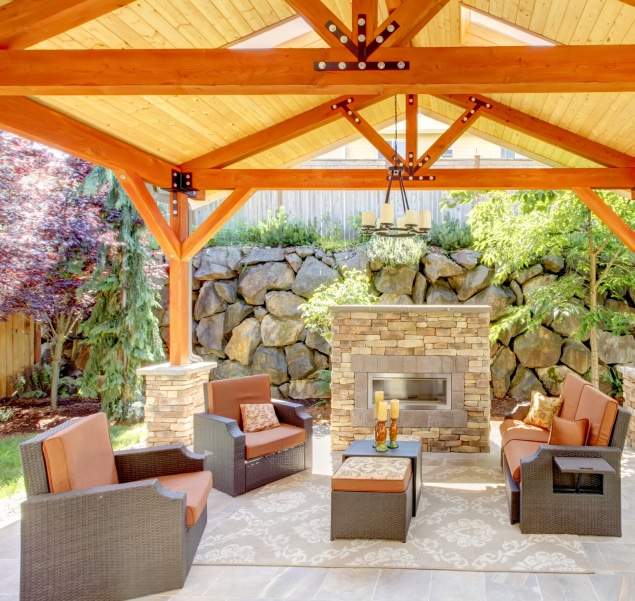
A patio in full afternoon sun may be uncomfortable to use on hot summer days. Think about where the sun falls at the times you will actually use the space, and plan shade from the start. A patio cover or pergola can affect post locations, footings and where roof water drains, so it is easier to design alongside the patio.
Surface choice plays a part too. EPA describes cool pavements as paving materials that reflect more solar energy, enhance water evaporation, or have been otherwise modified to remain cooler than conventional pavements, and it notes there is no official standard or labeling program for them, so ask for product information on any surface planned for a sunny spot. Lighting such as patio string lights and enough room for furniture also make a patio easier to use in the evening.
TurnKey Patio designs and builds custom patios and patio paving for homeowners in New Orleans and our surrounding service areas. We benefit if you hire us, and these checks are worth doing no matter who builds your patio. Call (504) 285-2824, Monday through Friday from 8:00 AM to 3:00 PM, or request a free estimate.
Settlement and soil movement are two causes worth checking. ICPI’s paving guidance says adequate compaction of the soil minimizes settlement, and a study by LSU-affiliated researchers and a researcher from Eustis Engineering describes expansive soil as soil that tends to swell or shrink as its moisture content changes. A contractor can look at the site, base and drainage to find the likely cause before recommending a repair.
Louisiana 811 says state law generally requires a locate request before excavation, and it advises calling at least two business days, excluding weekends and legal holidays, before the project starts. It says anyone planning to dig, excavate or grade should contact 811, so confirm whether you or your contractor is making the request.
ICPI says bedding sand under concrete pavers should conform to ASTM C33, often called concrete sand, and be screeded to a nominal 1 inch before compaction. It says masonry sand, limestone screenings and stone dust should not be used for bedding.
ICPI calls edge restraints a key part of interlocking concrete pavements, because they provide lateral resistance and maintain interlock among the pavers. It lists aluminum, steel, plastic and concrete as typical edge restraints and says at least 1 inch of vertical restraining surface should be in contact with the side of the paver.
Clay soil calls for careful site preparation. ICPI says a geotextile may be used over clay and moist silty soils or where soil stays saturated part of the year, and that very saturated or fine soils may need stabilization to reach compaction standards. Have the site evaluated so the base design matches your soil.

 Turnkey Patio