Residential License # 890459
Commercial License # 3667
Claim Your FREE Estimates Today!
Talk to an Expert
Residential License # 890459
Commercial License # 3667
Talk to an Expert

Choosing the right patio paving material in New Orleans means accounting for extreme summer heat, relentless humidity, heavy rainfall, and intense UV exposure. The best options combine durability, slip resistance, and thermal comfort so you can enjoy your outdoor living space from May through October without burning your bare feet or watching your investment crack and fade.
Living in New Orleans means embracing the outdoors, but our subtropical climate puts serious demands on every surface around your home. Between afternoon thunderstorms and summer temperatures that regularly push past 95 degrees, a patio surface needs to handle conditions that would punish lesser materials. At TurnKey Patio, we have spent years helping homeowners across the Greater New Orleans area select paving materials that stand up to Louisiana weather while looking beautiful season after season.
Whether you are building a new patio or resurfacing an aging slab, the material you choose will affect everything from comfort underfoot to long-term maintenance costs. This guide walks through the top paving options for our region, with honest assessments of how each performs when the heat index climbs.

Not every paving material that works in cooler, drier climates will perform well here. Our clay-heavy soils shift with moisture changes, creating movement beneath hardscaped surfaces. Summer sun heats dark-colored materials to the point where walking barefoot becomes impossible. Frequent rain demands proper drainage to prevent standing water and premature deterioration. When you invest in professional patio paving, understanding these regional factors helps you make a choice that lasts decades.
Travertine is arguably the best paving material for hot climates, and there is good reason it shows up on patios throughout the Gulf South. This natural stone stays noticeably cooler than concrete or brick because of its porous structure, which dissipates heat rather than absorbing and radiating it. On a 95-degree afternoon in the Marigny or Lakeview, travertine can feel 20 to 30 degrees cooler underfoot than a standard concrete slab.
Travertine also handles moisture well. Its natural texture provides solid grip even when wet, reducing slip hazards after sudden summer downpours. The stone resists mold and algae growth better than many alternatives, though periodic sealing is recommended in our humid environment. The main consideration is cost. Travertine sits at the higher end of paving materials, but homeowners who choose it consistently report satisfaction with both comfort and longevity.

Concrete pavers remain one of the most popular choices for New Orleans patios, and for good reason. They come in a wide range of colors, shapes, and patterns, letting you create everything from a classic herringbone layout to a modern geometric design. For homeowners planning a custom patio with a specific aesthetic vision, concrete pavers offer design flexibility that natural stone sometimes cannot match.
Concrete pavers handle our climate well and drain effectively when installed over a proper aggregate base with appropriate joint spacing. The trade-off is heat retention. Lighter-colored pavers perform reasonably in direct sun, but darker shades can become uncomfortably hot. Choose lighter tones and consider incorporating shaded areas with a pergola or patio cover to keep surface temperatures manageable.
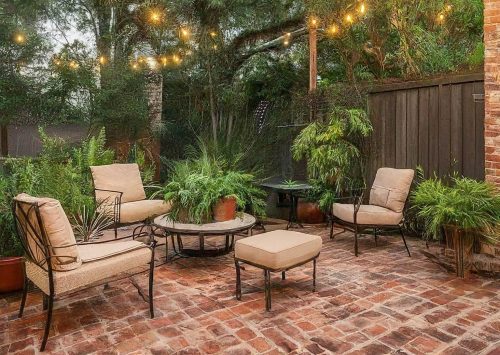
Few materials feel more at home in New Orleans than brick. The historic courtyards and garden paths throughout the French Quarter and Garden District showcase just how well brick ages in our climate. Brick pavers offer a warm, classic look that complements the city’s architectural heritage.
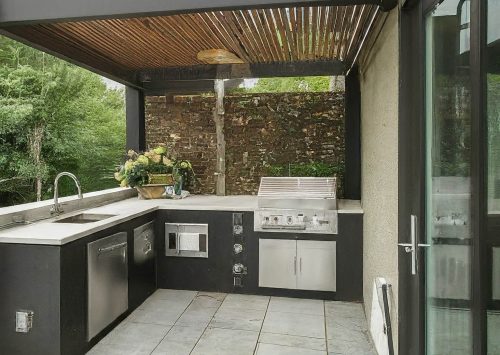
From a practical standpoint, brick is durable and handles humidity without significant issues. It does absorb water, which means it can develop moss or algae in consistently shaded, damp areas. Regular cleaning prevents this. Brick falls in the moderate range for heat retention, sitting between travertine and dark concrete. For patios adjacent to an outdoor kitchen, brick provides a sturdy surface that pairs well with cooking and entertaining spaces.

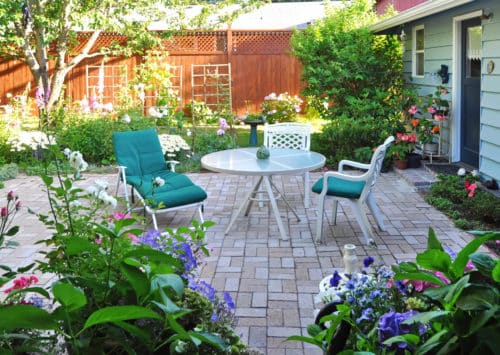
Flagstone brings an organic, slightly irregular appearance that works wonderfully in New Orleans garden settings. Its natural variations in color and shape create a one-of-a-kind surface every time. When set in sand or gravel joints rather than mortar, flagstone allows rainwater to percolate through naturally, reducing runoff and helping manage the heavy rainfall our area receives.
The key consideration with flagstone is installation quality. Because the stones vary in thickness, proper leveling requires skill and experience. Poorly installed flagstone can shift and create trip hazards. When installed correctly, flagstone patios can last a lifetime with minimal maintenance beyond occasional releveling and weed control in the joints.
Stamped concrete gives homeowners the look of natural stone or brick at a lower price point. A single continuous pour is stamped with patterns and colored to mimic more expensive materials. It can look stunning when freshly installed, and it works well for large patio areas where individual pavers would significantly increase labor costs.
However, stamped concrete has drawbacks in our climate. It can become slippery when wet unless a non-slip additive is applied. The coloring can fade under intense UV exposure, requiring periodic resealing. Cracks can develop as underlying soil shifts with moisture changes, and repairs are more difficult than replacing individual pavers. It remains a viable option, but homeowners should understand the maintenance commitment.
Given that New Orleans averages roughly 64 inches of rainfall per year, permeable pavers deserve serious consideration. These pavers allow water to pass through the surface into a gravel base below, dramatically reducing runoff and standing water. For properties in flood-prone areas, permeable paving is a practical investment that also supports local stormwater management.
Permeable pavers pair especially well with eco-friendly decking and other sustainable outdoor features. They come in styles that rival the appearance of traditional concrete pavers, so you do not have to sacrifice aesthetics for function. Maintenance involves periodic vacuuming or pressure washing of the joints to prevent sediment from clogging the drainage pathways.
Selecting the best paving material comes down to balancing your priorities. If barefoot comfort is essential, travertine leads the pack. If budget matters most, concrete pavers or stamped concrete offer strong value. If drainage is your primary concern, permeable pavers solve the problem elegantly. And if you want a surface that tells the story of New Orleans itself, nothing beats the character of brick.
No matter which material you lean toward, professional installation makes all the difference in how your patio performs over time. Proper base preparation, grading for drainage, and precise laying patterns ensure your investment holds up through years of Louisiana summers. A well-built patio also adds value to your home and extends your living space with features like a home deck or covered entertaining area.
Ready to explore which paving material is right for your New Orleans home? Contact TurnKey Patio today or call (504) 285-2824 to schedule a consultation. Our team is available Monday through Friday, 8 AM to 3 PM, and we are happy to walk your property and recommend the material that will serve you best.
Travertine pavers are widely considered the coolest option for hot climates. Their naturally porous structure dissipates heat rather than absorbing it, keeping surface temperatures significantly lower than concrete or brick. Lighter-colored travertine can feel 20 to 30 degrees cooler than a standard concrete slab on a hot afternoon.
Choose materials with natural texture and porosity, such as travertine or tumbled concrete pavers, which provide better grip when wet. Applying a non-slip sealant adds another layer of protection. Regular cleaning to remove algae and mold buildup, which thrive in humid conditions, also helps maintain safe traction on your patio surface.
Permeable pavers are an excellent choice for New Orleans, where annual rainfall averages around 64 inches. They allow water to drain through the surface into a gravel base below, reducing standing water and runoff. This makes them especially valuable for properties in flood-prone areas or neighborhoods with limited stormwater infrastructure.
Most quality patio pavers last 25 to 50 years or longer when properly installed and maintained. Natural stone options like travertine and flagstone tend to have the longest lifespans. Concrete pavers and brick also perform well over decades, though they may require periodic sealing and joint sand replacement to stay in top condition.
Sealing is recommended for most paving materials in our climate, though it is not always strictly required. A quality sealant helps prevent mold and algae growth, protects against UV fading, and makes surfaces easier to clean. Travertine and natural stone benefit most from sealing, while some concrete pavers come with built-in surface treatments that reduce the need for additional sealant.
Light-colored concrete pavers offer the best balance of affordability and performance in our climate. They handle rain and drainage effectively when installed over a proper base, and lighter tones stay cooler than darker alternatives. Stamped concrete is another budget-friendly option, though it requires more ongoing maintenance with resealing and crack repair over time.

 Turnkey Patio