Residential License # 890459
Commercial License # 3667
Claim Your FREE Estimates Today!
Talk to an Expert
Residential License # 890459
Commercial License # 3667
Talk to an Expert

Gazebos and pavilions are both popular outdoor structures for New Orleans homeowners, but they serve different purposes and suit different yard layouts. A gazebo is typically an enclosed, freestanding structure with a peaked roof and open sides, while a pavilion offers a broader, open-air footprint designed for entertaining and flexible use. Understanding the differences helps you invest in the right structure for your property, your lifestyle, and Louisiana’s demanding climate.

Living in New Orleans means spending time outdoors is part of the culture, but it also means dealing with intense afternoon sun, sudden rain showers, and humidity that rarely lets up from May through October. A well-chosen outdoor structure gives you a comfortable, shaded retreat without forcing you inside every time the weather shifts. At TurnKey Patio, we work with homeowners across the greater New Orleans area to select and install structures that hold up to our unique climate while enhancing everyday outdoor living.
Both gazebos and pavilions provide shade and shelter, but the similarities start to thin out once you consider size, layout, versatility, and how you plan to use the space. Choosing between the two comes down to understanding what each structure offers and how it fits your yard. Our gazebos and pavilions collection gives you a closer look at the options available, but this guide will walk you through the core differences so you can narrow down your choice with confidence.
A gazebo is a freestanding outdoor structure, usually hexagonal or octagonal in shape, with a peaked or domed roof and open sides. Some models include built-in railings or half-walls, while others are fully open. Gazebos are traditionally smaller in footprint, making them a natural fit for compact yards, garden corners, or as a focal point in a larger landscape.
Hardtop gazebos with aluminum or steel frames and solid roofing panels have become especially popular in the New Orleans market because they handle heavy rain and wind far better than soft-top alternatives. If you are looking for a defined, intimate space for morning coffee, quiet reading, or small gatherings with a few chairs, a gazebo is often the right call. The enclosed shape also lends itself well to mosquito netting or screen panels, which is a practical advantage during Louisiana’s long bug season.

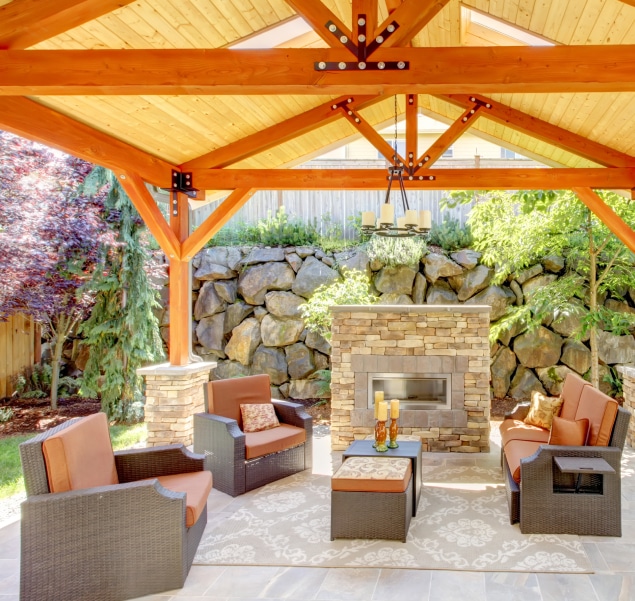
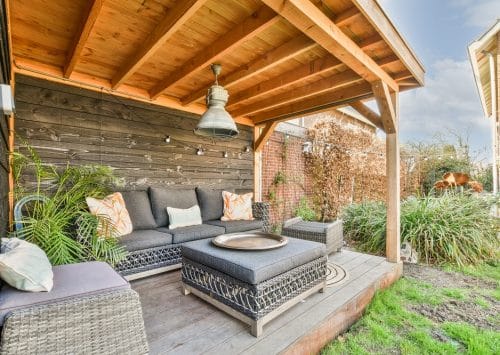
A pavilion is an open-air structure supported by posts or columns with a flat or gently sloped roof overhead. Pavilions are typically rectangular and offer significantly more floor space than a gazebo. That extra room makes them ideal for outdoor dining, entertaining, or housing features like grills, seating groups, and even full outdoor kitchens.
Pavilions come in different configurations depending on how much weather protection you need. An open-air pavilion like the Eivissa Open-Air Pavilion provides structural framing and a clean architectural look while leaving the roof open for airflow and natural light. For homeowners who want full coverage from rain and sun, a climate pavilion such as the Eivissa Climate Pavilion with Adjustable Covering adds retractable or adjustable panels that let you control shade and ventilation throughout the day.
Size and footprint: Gazebos generally range from 10 to 14 feet across, while pavilions can span 12 to 20 feet or more in length. If your yard is on the smaller side, a gazebo fits without dominating the space. Larger properties with room for a dedicated outdoor living zone will benefit more from a pavilion’s open layout.
Shape and design: Gazebos lean toward circular or multi-sided designs with a peaked roof, giving them a more ornamental, garden-like character. Pavilions are rectangular and modern in profile, blending well with contemporary home architecture and custom patio designs.
Versatility: A pavilion wins on flexibility. The open floor plan accommodates furniture rearrangement, cooking setups, and large group gatherings far more easily than a gazebo’s defined shape. Gazebos, on the other hand, create a more enclosed, cozy atmosphere that works well as a standalone retreat.
Weather protection: Both structures provide overhead shelter, but pavilions with adjustable coverings give you active control over sun and rain exposure. A hardtop gazebo offers solid protection within its footprint, though the smaller size limits how many people or furnishings you can keep dry at once.

New Orleans homeowners need outdoor structures that can handle more than just sunshine. Afternoon thunderstorms roll through regularly from late spring through early fall, and hurricane season runs from June through November. Any gazebo or pavilion installed here should be built with corrosion-resistant materials, properly anchored footings, and roofing rated for high wind loads.
Humidity is another factor. Wood structures require consistent sealing and maintenance to prevent rot and mildew, which is why many local homeowners opt for aluminum-framed gazebos and pavilions instead. Aluminum holds up to moisture without warping or deteriorating, and powder-coated finishes resist fading from UV exposure. Pairing your structure with a well-built patio cover or adding string lights extends both the function and the ambiance of your outdoor space well into the evening hours.
The best choice depends on how you plan to use the space and what your yard can accommodate. Choose a gazebo if you want a charming, self-contained structure for small-scale relaxation in a tighter space. Choose a pavilion if you entertain regularly, want room for an outdoor kitchen or dining area, or prefer a modern, open design that integrates with your existing patio.
Many homeowners pair either structure with a pergola or adjacent patio to create connected outdoor zones for different activities. A pavilion over the dining area with a pergola extending over a lounge space, for example, gives you layered shade and a polished look that adds real value to your property.
Choosing between a gazebo and a pavilion is easier when you have a professional evaluate your yard, discuss your goals, and walk you through the options that fit your budget and lifestyle. TurnKey Patio provides free consultations for homeowners throughout New Orleans, Metairie, Kenner, Mandeville, and the surrounding communities. Visit our contact page or call (504) 285-2824 to schedule yours. We are available Monday through Friday, 8 AM to 3 PM.
A gazebo is a freestanding structure with a peaked roof and a rounded or multi-sided shape, typically designed for smaller, more intimate settings. A pavilion is rectangular with an open floor plan and a flat or gently sloped roof, offering more usable space for dining, entertaining, and outdoor cooking.
A gazebo is generally the better fit for a compact yard because its smaller footprint takes up less space while still providing shade and shelter. Gazebos work well tucked into a garden corner or as a standalone focal point in tighter layouts common in neighborhoods like the Garden District and Mid-City.
Yes, when properly installed with anchored footings and wind-rated roofing materials. Aluminum-framed pavilions are especially well-suited to the New Orleans climate because they resist corrosion from humidity and can be engineered to handle high wind loads during storm season.
In most cases, freestanding outdoor structures in Orleans Parish require a building permit, especially if they exceed a certain size or are permanently anchored. Requirements can vary by neighborhood and historic district, so it is best to confirm with your contractor before installation begins.
Costs vary depending on size, materials, and features. A quality hardtop gazebo typically ranges from $3,000 to $8,000 installed, while a pavilion with a solid roof and aluminum frame can range from $6,000 to $20,000 or more. Climate pavilions with adjustable coverings fall on the higher end due to their advanced functionality.
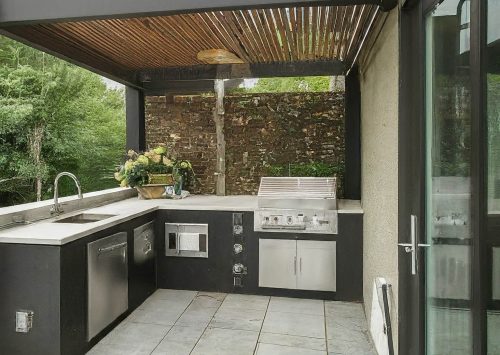
Absolutely. Pavilions are designed with the open floor space to accommodate outdoor kitchens, dining sets, ceiling fans, and lighting fixtures. Adding electrical and plumbing during the initial installation is the most cost-effective approach, but these features can also be added after the structure is in place.

 Turnkey Patio