Residential License # 890459
Commercial License # 3667
Claim Your FREE Estimates Today!
Talk to an Expert
Residential License # 890459
Commercial License # 3667
Talk to an Expert

Picking between motorized and manual awnings depends on your taste, budget, and how easily you want it to be used. Motorized awnings have a remote, super handy for large or hard-to-reach areas. Manual ones cost less and use a crank, so you don’t need any electricity. Both types have their perks, like automation or saving money.
TurnKey Patio can tell you more about how each works so that you can pick the best one for your place. Contact us today to explore your options. We’re here to help you choose the awning that fits your space and lifestyle.

Are you trying to pick between motorized and manual awnings? Well, both are useful and can look great, but they each have their pluses. Cost, the amount of work required to keep them running, and their ease of use can all make a difference in your choice.
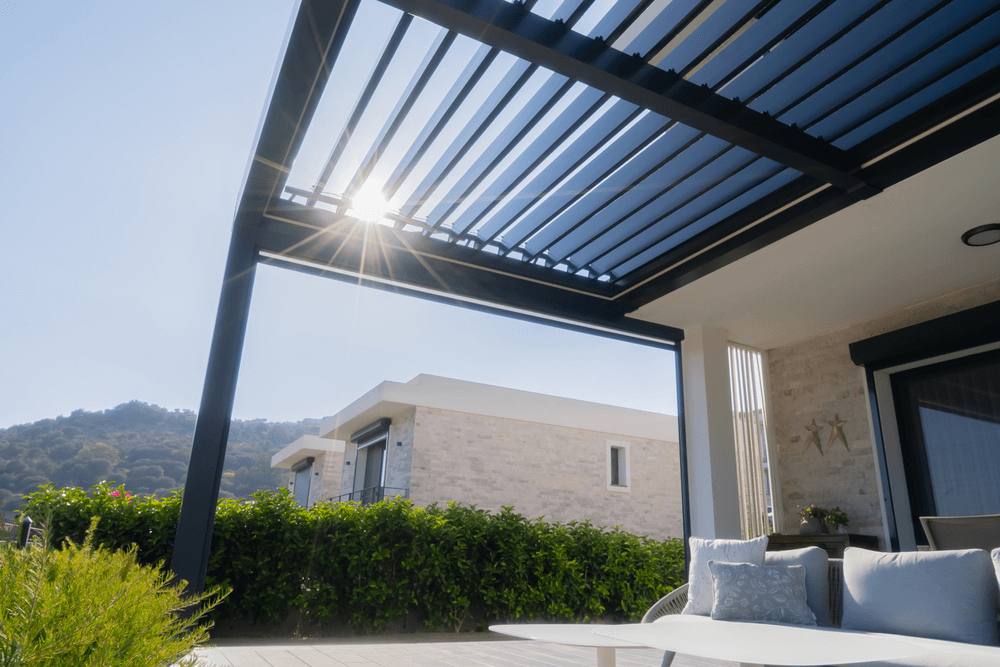
Motorized awnings are usually easier for homeowners than manual ones. Sure, they cost more to begin with, but they save you money later on energy costs. They block the sun during the hottest part of the day, which can lower your cooling bills, especially if you live where it’s sunny and warm.
Manual awnings require fewer installation complexities and thus fewer labor costs. Motorized awnings will need a professional installation. This makes sure the wiring and motor fit together perfectly, and it’s an extra expense that makes things look nicer overall.
Manual awnings don’t have many electric parts, so they usually cost less to keep in good shape. Occasional repairs to the motor or sensor of motorized awnings can add to costs. You’ll be happy to know that most models are built to last!
The convenience motorized awnings offer is second to none. Whether you choose to use remote control, scheduled retraction, or even weather sensors, they’re the perfect choice for those who enjoy the automation of a smart home.
Manual awnings require a certain amount of physical force, making them less convenient or practical for all users.
While both types provide shelter from the elements, motorized awnings have a clear advantage in responsiveness. Automated systems that retract in the event of high winds keep the awning’s structural integrity in check. In contrast, manual awnings are based on user action.
Many motorized awnings feature built-in safety features, such as wind sensors, minimizing damage from unexpected and sudden changes in weather. Without these options that motorized awnings have, manual awnings are more limited in their ability to adjust to unexpected risks.
Motorized models help save energy by cooling indoor temperatures in the summer months. This new, value-added functionality helps make the additional expense worth it to eco-minded homeowners.
Motorized, retractable awnings have more options than ever with built-in lighting, pitch adjustability, and fabric selection. Manual models, though equally as customizable, don’t come with a host of conveniences, such as smart-home integration.
Motorized awnings make use of today’s technology, providing the option for integration with smartphone apps or home automation systems. This new advancement makes usage easier and fits the trend toward smart living perfectly.
End-user testimonials frequently focus on their delight in choosing motorized awnings because of their convenience and energy-absorbing advantages. Though motorized awnings have their advantages, many customers still prefer the peace of mind and affordability of manual awnings.

When picking an awning, think about whether you want a motorized or manual one. Keep in mind the starting price tag and what you’ll save down the road. Motorized ones usually cost more to set up because they have fancier parts and need electrical work.
Taken together, they can provide long-term value by dramatically increasing energy efficiency. They prevent 80% of that harsh sunlight while reducing indoor cooling needs by up to 25%. This move improves your long-term affordability by drastically reducing energy bills. This is what makes them a savvy choice for anyone looking to maximize comfort and minimize costs.
Consider that manual awnings are less expensive up front, but there are hidden costs such as ongoing maintenance or even subpar results from an attempted DIY installation. Units improperly installed can require expensive repairs, eating away at initial savings.
By opting for professionally installed solutions, like custom-built awnings, you set the stage for an impressive return on investment for years to come.
Deciding between motorized and manual awnings depends on what you need and what you can afford. Motorized awnings are easy to use but cost more. Manual awnings are simpler and cheaper.
Think about how often you’ll use your awning and how much you want to spend on upkeep. Both types can make your patio cooler and more stylish. If you want some help picking the right one, we at TurnKey Patio can assist you.
Reach out to us today to explore the best awning options for your space. Let’s find a solution that fits your style and budget.

 Turnkey Patio