Residential License # 890459
Commercial License # 3667
Claim Your FREE Estimates Today!
Talk to an Expert
Residential License # 890459
Commercial License # 3667
Talk to an Expert

Complete your pergola with weather-resistant products like treated wood, powder-coated metal, or vinyl to withstand rain and sunlight. A weatherproof or retractable covering provides added protection. Sealing and staining are essential to prevent water damage and extend the life of your pergola for many years. Be sure to follow these care tips throughout the year to keep your outdoor space in top shape.
TurnKey Patio can help bring your vision to life. Call us today to build your dream patio and make the most of your outdoor space!

A weatherproof pergola requires hardwearing materials, stable foundations, and intelligent design. Rot-proof timber, composite, or aluminum absorb the pounding from the elements, but strengthened columns, rust-free fixings, and weatherproof paint provide long-term stability.
Material selection matters. Redwood and cedar will resist moisture, rot, and insects well. Use durable, low-maintenance composite or aluminum pergolas in extreme weather or wet climates.
Aluminum louvered roofs also withstand heavy rain and high winds. Do not use untreated wood, which will rot and warp in wet climates. Finally, select UV-resistant materials to avoid sun fading and cracking.
Properly fastening your pergola posts is important for weather resistance. Posts placed into concrete footings remain solid in high winds and heavy rainfall. Where hurricanes are common, choose a wind rating of a minimum of 115 mph.
Galvanized steel brackets add reinforcement and rust resistance. Raising the posts on footings also keeps water from accumulating, reducing long-term damage.
A sloping roof offers protection from rain and sun, and adjustable louvers permit ventilation. A solid roof offers great rain and snow protection. An open design minimizes wind resistance and offers protection to the structure. In windy locations, though, steer clear of hollow-core vinyl because it possesses poor wind resistance.
Use stainless or galvanized hardware to prevent rust and corrosion. Use heavy screws and bolts instead of nails to reinforce the joints. Weather-resistant fasteners and brackets will support the pergola for a longer time, particularly where storms are frequent.
Weathertight stain or paint keeps water and sunlight out of wood. Exterior sealants never dry out and crack, and mildew-proof finishes are ideal for bathrooms and other wet places. To make your pergola last, re-stain or repaint it every few years.
If you are designing a weatherproof pergola or selecting a pergola roof, the choice of your overhead cover becomes necessary. You’ll need to see a combination of strength, attractiveness, and shelter for your outdoor space.
Fixed covers protect from rain and sunlight. Polycarbonate panels that are light in weight permit natural light while stopping UV light and rain. Metal roof finishing, such as steel or aluminum, is strong but might cut down on sunlight. PVC panels are cheap and simple to install, but could fail during extreme weather.
Accurate sealing is important to avoid leaks, particularly where drainage is difficult. Methods such as overlapping panels, applying weather-resistant sealants, and fitting edges snugly can assist. Raising the roof on larger pergolas can enhance runoff and coverage.
Retractable pergola covers are perfect for every weather condition. Their UV-proof fabric shields from the sun and rain, which makes them good for outdoor applications. Motorized systems enable you to easily adjust for convenience.
To ensure they don’t last for a short time, secure these systems against wind. When in your backyard, having the rows of fabric jammed together offers greater protection. The UV-resistant fabrics ensure that the canopy does not rot and look ugly over time, making it a great option for use in your outdoor area.
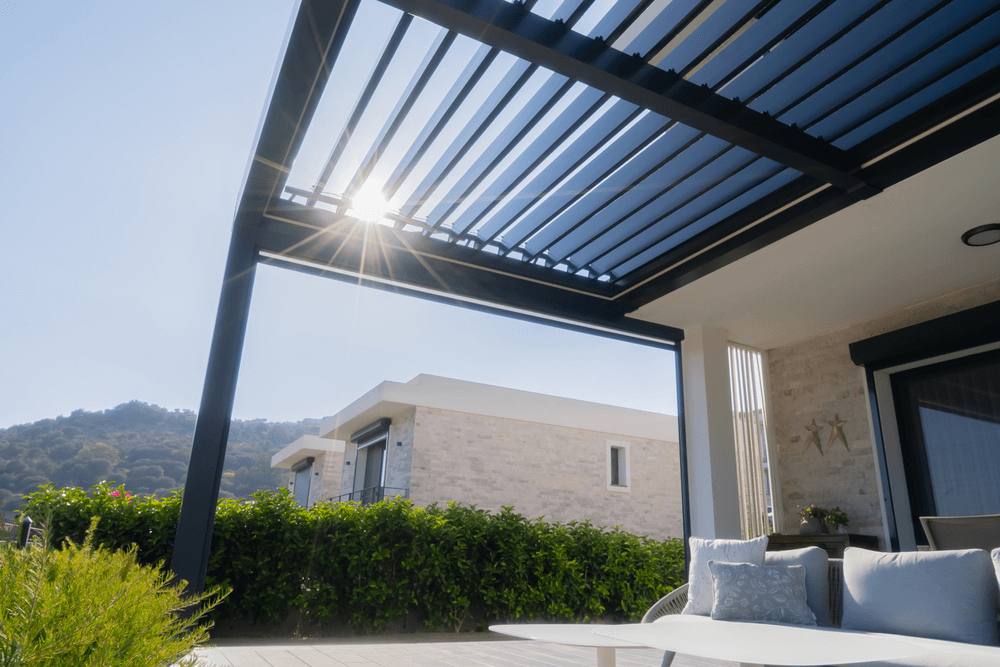
Louvered roofs that are adjustable offer individualized shade, ventilation, and rain protection. I prefer aluminum louvers as they are lightweight and resistant to rust. You would do well to include drainage channels so water does not pool up in the rain.
Louvered systems that work automatically provide accurate light and airflow control, which makes them a contemporary and hassle-free choice for lavish outdoor environments.
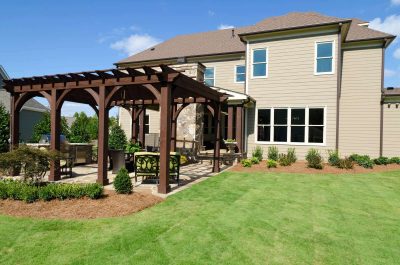
Efficient water management is essential for a durable pergola. Begin with the installation of gutters along the roof that will harvest rainwater and take it away from the foundation. Use rust-resistant material such as aluminum, copper, or PVC, and clean the gutters regularly, perhaps using leaf guards to stop clogging.
Make sure the pergola roof is sloped towards the gutters so that water will not collect, and install it using a level. Adjustable louvered roofs can be used to control runoff and create shade. Proper ground drainage must also be considered; install a French drain to reroute water and utilize gravel or permeable pavers for improved absorption. Grade the land to slope away from the building and keep water-retaining plants away to improve drainage.
Design and maintain your pergola in a way that makes it weather-proof. Spend on durable materials, include proper drainage, and add strong bracing for extra stability. Install polycarbonate panels or water-resistant fabric for added sun and rain protection. Regularly apply wood sealant and check for any damage to keep your pergola in top condition all year round.
Your pergola will be weather-resistant and a joy to look at with these improvements. Ready to enhance your outdoor space? Contact us at TurnKey Patio today for a free consultation, and let’s start designing a beautiful, durable pergola built to last.
 Turnkey Patio