Residential License # 890459
Commercial License # 3667
Claim Your FREE Estimates Today!
Talk to an Expert
Residential License # 890459
Commercial License # 3667
Talk to an Expert

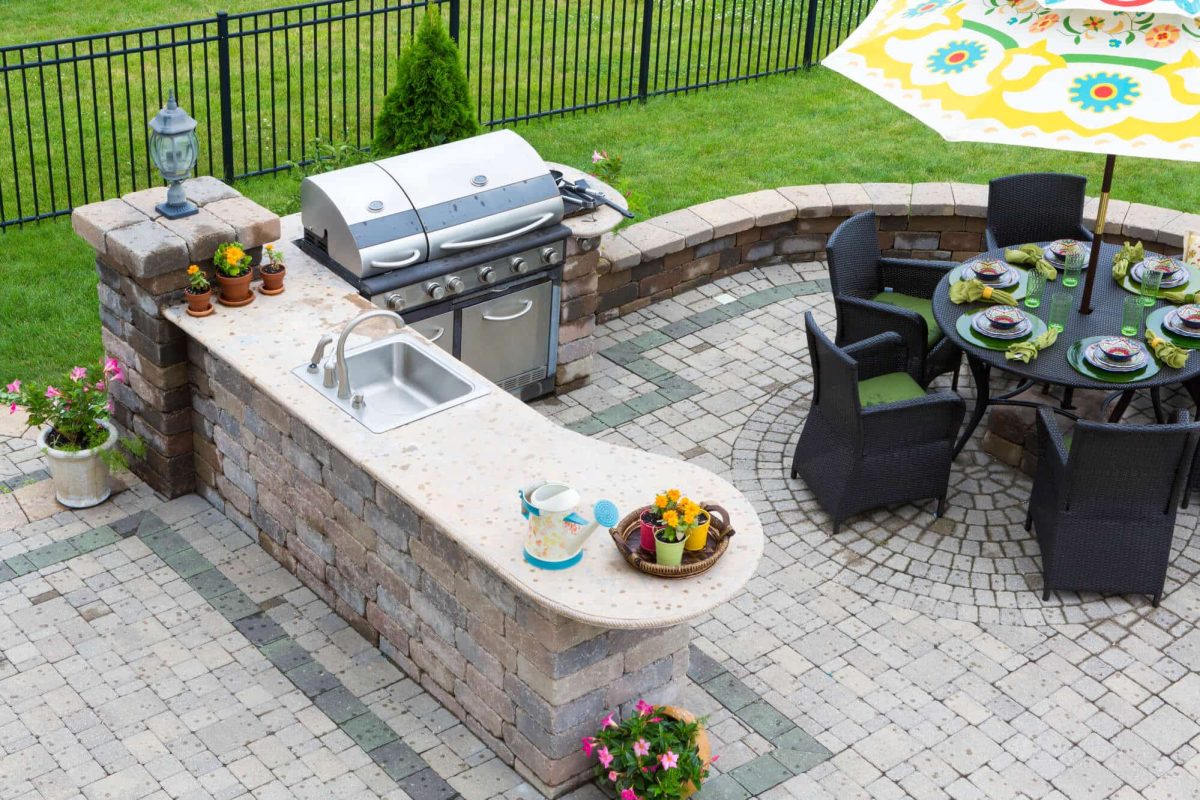
Integrating a bar or island into your outdoor kitchen gives additional counter space for meal preparation, seating for guests, and storage for anything important. Weather-resistant stone or concrete material ensures durability, and wise design choices like built-in sinks or coolers give utility.
Let our experts from Turnkey Patio educate you on how to add that attractive bar or island to your outdoor kitchen. Feel free to contact us for professional advice.
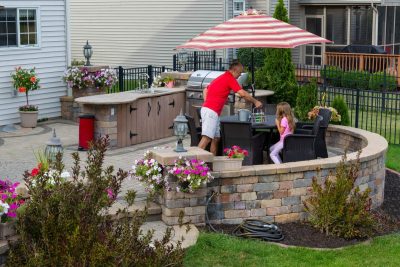
An outdoor bar isn’t just a design feature; it’s actually an improvement in lifestyle, a practical but entertaining area where people can enjoy knowing life is a little loftier than common, everyday events or occasions of celebration.
An outdoor bar lures people like anything; then guests enjoy some fun while being connected with the cook. It turns gatherings into enjoyable events, be it family time during the brunches or dinners. This ambience suits everything from small gatherings to big celebrations and then makes a very lively transition from day to night.
Adding seating, lighting, or a sound system can enhance the experience for your guests.
Outdoor bars not only add pretty faces, but they also significantly increase the functionality of cooking outdoors. Extra space for storing things, counter space, and special equipment like sinks or mini-fridges lessens the load of indoor kitchens and also reduces electricity bills.
Ideal for hot summer days, fire up the grill without heating your home, and enjoy restaurant-quality meals and beverages at home, “fun” and “intimate” without the high costs.
An outdoor bar is great for immediate fun and can add to your home’s resale value. Well-designed outdoor living spaces are a great attraction to buyers; such spaces transform a house into a luxurious requirement, besides functionality and aesthetics.
The modern or rustic touch of an outdoor bar will give that extra character and add one more feature that buyers will value when looking for homes.
When planning the design of your outdoor bar or island, it is essential to consider several key elements that will enhance both functionality and aesthetics. Begin by selecting a suitable location that offers ample space and is easily accessible, ensuring that it complements the overall layout of your outdoor area.
There must be enough clearance of at least 1.2 meters all around for fluid movement and convenience, especially where grills or appliances are concerned.
In much bigger spaces (10×10 up to 20×20 ft), place the island so as to identify the cooking area from the serving and then the dining area. Straight designs suit smaller spaces, while L or U shapes should do fairly well in larger areas.
Comfortable seating is one of the most important elements. Space bar stools at least 15 cm (6 inches) apart, allowing 90 cm (3 feet) per stool to give the stool breathing room for comfort. Backless stool gives a casual vibe, while high backs have that touch of elegance. Design your countertop with a 25-30 cm overhang for seating, encouraging conversation.
Bar counters have a standard height of 110 cm for a comfortable sitting or standing height. Employ one surface lower (90 cm) for food prep and the second higher for eating for a level design. Choose durable weather-resistant materials, such as granite or composite.
Maximize utility with storage in your island, including utensil cabinets, glassware shelves, and propane tank spaces. Use waterproof materials such as stainless steel or treated wood, and consider adding a mini-fridge for drinks.
That which should be formed should go with your patio. While rectangular islands are versatile, circular islands create cozy seating areas. An L shape gives more working area with a depth base of at least 7-14 mm.
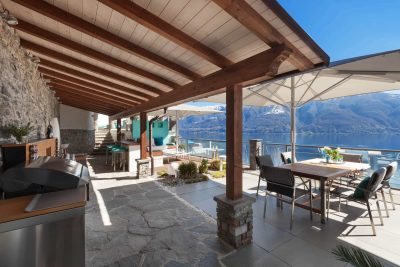
Selecting weatherproof materials is key when you’re adding a bar or island to your outdoor kitchen. Your outdoor kitchen stands up to the elements, rain, sun, temperature change, and durability, and weather-resistant materials must dictate all material choices.
Aesthetically pleasing, functional, and weatherproof countertops. Get concrete, which is great for temperature and moisture. Add granite as a timeless natural stone, and seal the stones for stain and weather resistance. Many modern options with low maintenance are offered by composite materials. Metal post standoffs can improve airflow and prevent water buildup.
The most sturdy and moisture-resistant foundation is a prerequisite. Treated plywood cores covered with builder’s felt would be moisture-proof. Faux stone or stucco gives a sleek finish that outlasts elements. For strength, a 1″(Inch)-wide, 1¼ deep flange should be incorporated, and a scratch coat for adding smoothness to the surface.
Use stainless steel for hinges and handles for corrosion resistance, and for UV protection, use powder-coated finishes. Cure mortar for at least 24 hours, especially in high-wear areas.
Adding a bar or island will transform your outdoor kitchen into an efficient storage area and add style and ease to entertaining. Opt for hardy, weatherproof materials to ensure durability and construct a thoughtful design compatible with your lifestyle needs.
A well-designed bar or island brings people together and makes your outdoor space inviting. Call us up now at Turnkey Patio!
 Turnkey Patio