Residential License # 890459
Commercial License # 3667
Claim Your FREE Estimates Today!
Talk to an Expert
Residential License # 890459
Commercial License # 3667
Talk to an Expert

New Orleans homeowners have five main patio cover options to consider: solid aluminum covers, louvered roof systems, lattice covers, insulated patio panels, and freestanding structures. Each type handles Louisiana’s heavy rain, intense UV exposure, and high humidity differently, so choosing the right one depends on how you use your outdoor space and how much weather protection you need.

Living in New Orleans means dealing with weather that changes fast and hits hard. Summer afternoons bring sudden downpours that can drench an uncovered patio in minutes, and the sun between May and October is strong enough to make bare concrete too hot to walk on barefoot. A good patio cover transforms your outdoor space from a fair-weather luxury into a year-round living area. At TurnKey Patio, we install patio covers designed specifically for the demands of the Gulf South climate, and we have seen firsthand how the right cover changes the way families use their backyards.
Before you commit to a style, it helps to understand what each type of patio cover offers and where it performs best. The five options below represent the most popular and practical choices for homes in the New Orleans metro area.
Solid aluminum covers are the workhorse of patio protection in South Louisiana. These covers use interlocking aluminum panels mounted to your home’s fascia or a freestanding support frame, creating a watertight roof over your patio. They block 100% of rain and direct sunlight, which makes them the go-to choice for homeowners who want reliable, all-weather coverage without worrying about leaks.
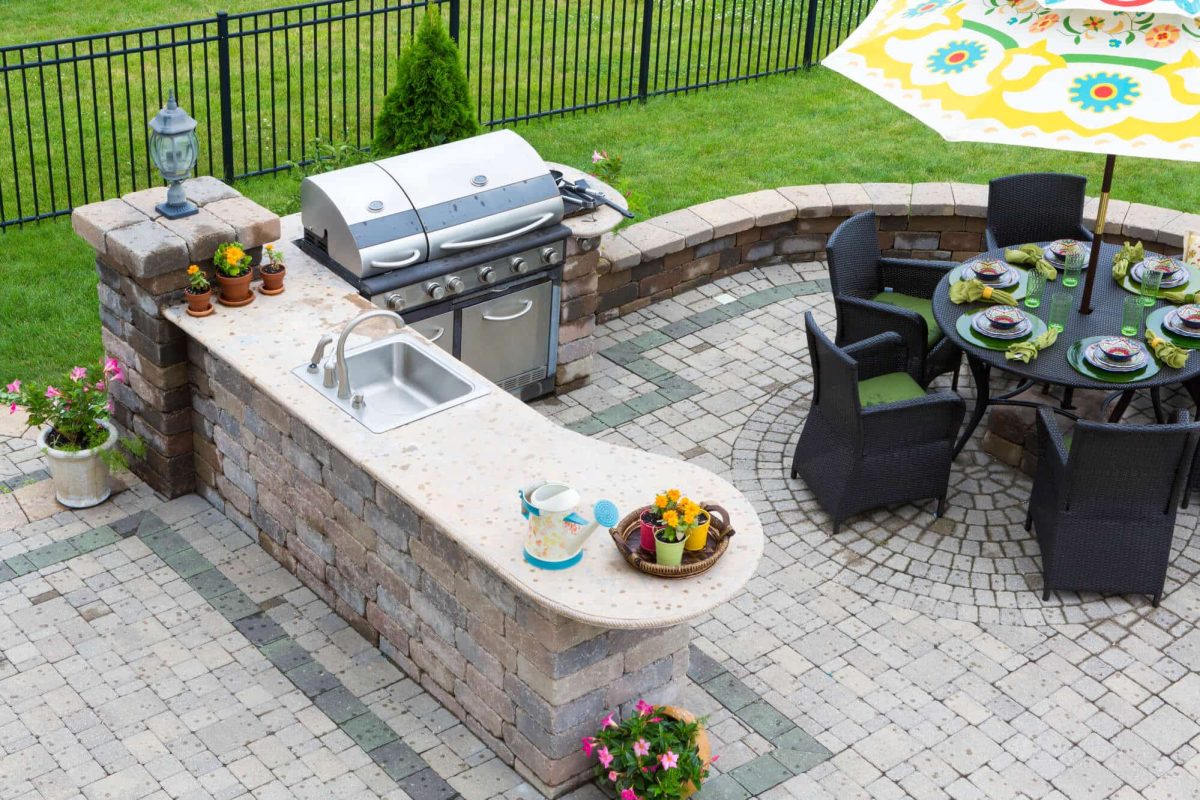
Aluminum does not rust, warp, or rot, and it holds up well against the salt air that drifts in from the Gulf. Maintenance is minimal. An occasional rinse with a garden hose keeps the panels looking clean. Solid covers also pair well with ceiling fans, mounted lighting, and outdoor kitchen setups because the overhead surface is completely enclosed. If you cook outside regularly or host gatherings rain or shine, a solid aluminum cover is one of the most dependable options available.

Louvered covers, sometimes called adjustable pergola roofs, feature rows of rotating slats that tilt open or closed. When the louvers are closed, the cover functions like a solid roof, shedding rain and blocking sun. When open, they allow airflow and filtered light through, which helps keep the space comfortable on mild days without feeling boxed in.
Many louvered systems are motorized and can be operated with a remote control or a smartphone app. Some include integrated rain sensors that close the louvers automatically when moisture is detected. This combination of flexibility and automation makes louvered covers a popular upgrade for homeowners who want precise control over their outdoor environment. Bioclimatic pergola systems take this concept further by incorporating drainage channels within the louver framework, managing heavy rainfall while maintaining a clean, modern look. These systems are especially well suited for the New Orleans area, where a clear morning can turn into a heavy storm by early afternoon.
Lattice covers offer a middle ground between full shade and open sky. Built with crisscrossed slats, typically aluminum or treated wood, lattice covers filter sunlight and create dappled shade patterns beneath. They do not provide rain protection, which means they are best suited for homeowners who primarily want to reduce sun exposure rather than block precipitation.
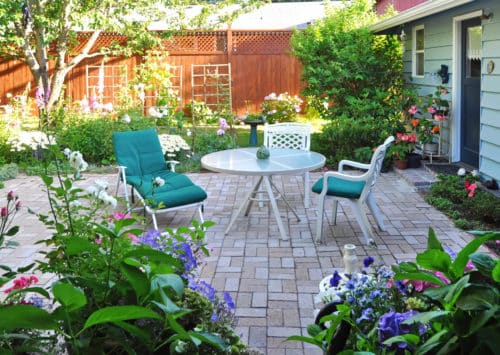
In New Orleans, lattice covers work well over garden areas, side patios used for morning coffee, or spaces where climbing plants like jasmine or bougainvillea can weave through the framework. The open design encourages air circulation, which helps with the humidity that builds during Louisiana summers. Lattice covers are also among the most affordable options, making them a practical starting point for homeowners who may want to upgrade to a solid or louvered system later. If you are exploring ways to add partial coverage alongside other structures, pergolas offer a similar aesthetic with additional design flexibility.
Insulated patio covers use sandwich-style panels with a foam core between two layers of aluminum. This construction does more than just block rain and sun. It actively reduces heat transfer, keeping the space beneath the cover noticeably cooler than what you would experience under a standard solid panel. In a city where summer temperatures routinely reach the mid-90s with heat indices above 105, that temperature difference is meaningful.

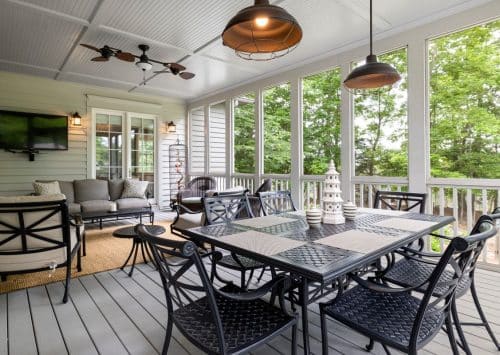
Insulated panels also dampen the sound of rain, which anyone who has sat under a metal roof during a New Orleans thunderstorm can appreciate. The added rigidity of the foam core gives these covers better structural performance in high winds compared to single-layer panels. For homeowners who want their covered patio to feel like a true extension of their indoor living space, insulated covers deliver the comfort and durability to make that happen. Pairing an insulated cover with a screenroom enclosure creates a fully protected outdoor room that keeps out rain, heat, and insects.
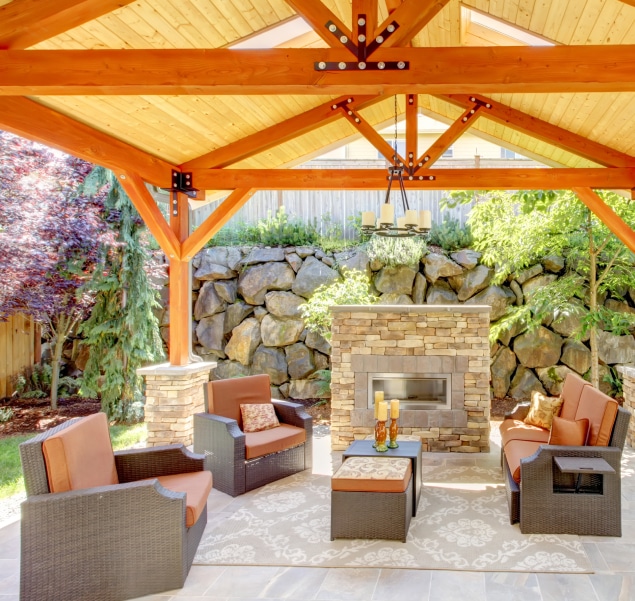
Not every patio sits directly against the house. Detached seating areas, poolside zones, and garden entertaining spaces all benefit from overhead coverage, and that is where freestanding patio covers come in. These structures stand on their own posts and do not attach to the home’s roofline or fascia, giving you complete flexibility on placement.
Freestanding covers can use any of the panel types mentioned above, whether solid, louvered, lattice, or insulated. The key advantage is location independence. You can position a freestanding cover over a fire pit area at the back of your yard, above a detached custom patio, or beside a pool without worrying about proximity to the main structure. Gazebos and pavilions offer a more finished version of this concept, with dedicated framing, roofing, and optional side enclosures for a complete outdoor room experience.
The best patio cover for your home depends on three things: how much weather protection you need, how you plan to use the space, and your budget. Solid and insulated covers provide the most complete protection and are ideal for outdoor kitchens, dining areas, and spaces you want to use daily regardless of weather. Louvered systems give you the most versatility, letting you adjust your environment on the fly. Lattice covers are the most budget-friendly option and work well for partial shade in garden or casual seating areas. Freestanding structures solve the problem of covering spaces that are not adjacent to your house.
New Orleans weather demands materials and engineering that can handle heavy rain, high winds during storm season, intense UV, and persistent humidity. Choosing a cover rated for these conditions, and having it installed by a team that understands local building requirements, is the difference between a structure that lasts 20 years and one that needs repair after its first hurricane season. Awning systems are another option worth considering for areas where a full rigid cover is not necessary but retractable shade would be useful.
If you are ready to add a patio cover to your New Orleans home, the next step is a consultation where we evaluate your space, discuss your priorities, and recommend the best option for your property. TurnKey Patio serves homeowners throughout New Orleans, Metairie, Kenner, Mandeville, Covington, Slidell, and the surrounding areas. Visit our contact page or call (504) 285-2824 to schedule your free estimate. We are available Monday through Friday, 8 AM to 3 PM.
Solid aluminum covers and insulated panels provide the best rain protection because they create a fully sealed overhead surface with no gaps. Louvered systems also block rain effectively when the slats are closed, and many include built-in drainage channels that direct water away from the covered area.
Patio cover costs in the New Orleans area typically range from $2,500 for a basic lattice cover to $15,000 or more for a motorized louvered or insulated system. The final price depends on the cover type, size, material, and whether the structure is attached or freestanding.
In most cases, yes. Patio covers that attach to your home or involve a roofed structure typically require a building permit in Orleans Parish. Your contractor should handle the permit process as part of the project scope, and TurnKey Patio manages permitting for every installation we complete.
Yes, patio covers can be installed over an existing patio surface as long as the foundation is structurally sound and the footings for the cover posts can be properly anchored. A site evaluation will confirm whether your current patio can support the cover type you want.
A traditional pergola has an open-beam roof that provides partial shade but no rain protection. A patio cover uses solid, insulated, or louvered panels to create a weather-tight or adjustable overhead surface. Some modern pergola systems, like bioclimatic models, blur this line by incorporating closeable louvers that function like a patio cover.
Aluminum patio covers typically last 20 to 30 years or more in the Louisiana climate with minimal maintenance. Aluminum resists rust, rot, and insect damage, and it holds up well against the salt air, heavy rain, and UV exposure that are common along the Gulf Coast.
 Turnkey Patio