Residential License # 890459
Commercial License # 3667
Claim Your FREE Estimates Today!
Talk to an Expert
Residential License # 890459
Commercial License # 3667
Talk to an Expert

Fascia is the board that closes off the ends of your roof rafters along the eave, and it does far more than finish the roofline. It carries the weight of your gutters, terminates the water path off the roof, and closes the soffit that feeds your attic ventilation. Getting the material and the installation details right matters more in a wet climate like New Orleans than almost anywhere else.
Fascia is easy to dismiss as trim. It reads as a decorative band under the roof edge, it is painted to match, and nobody thinks about it until it starts sagging or a gutter pulls loose. That reading is wrong in a practical way, and homeowners who understand what the board is actually doing make better decisions about material and installation. TurnKey Patio handles fascia board installation across the Greater New Orleans area, and this is what the component does.
Your roof rafters or truss tails extend past the exterior wall to form the overhang. Their ends are cut to a common line, and the fascia is the board fastened across those cut ends, running horizontally along the entire eave. On a gable roof it also runs up the rake edge in many designs.
The soffit is the horizontal panel underneath, spanning from the fascia back to the wall. Together the two enclose the overhang. That enclosure is what keeps rain, wind, birds, and insects out of the space where the rafters meet the wall, which is one of the most vulnerable junctions on a house.
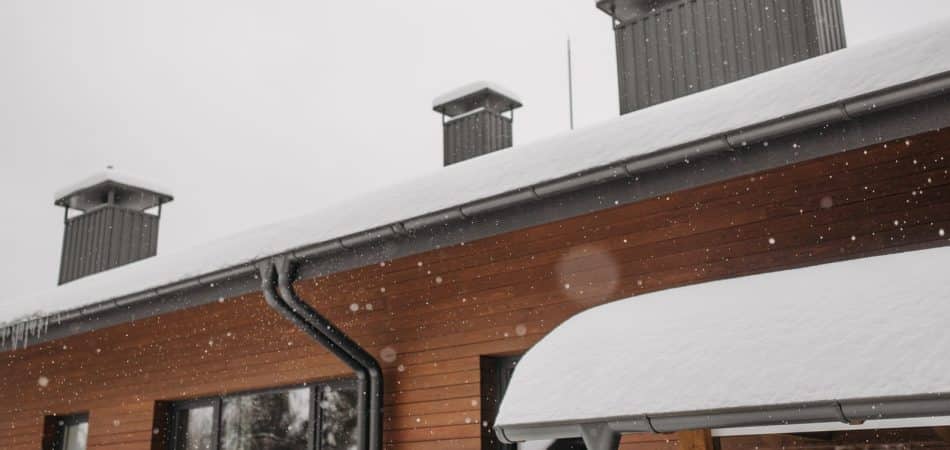
Gutters hang from the fascia. That sounds trivial until you consider what a Gulf Coast downpour puts into them. Water is heavy, and a full run of gutter during a hard rain applies real load to the board and to every fastener holding it. Deteriorated fascia cannot hold a hanger, and a gutter that pulls away dumps water directly against the wall and foundation. Most gutter failures we are called out for are fascia failures wearing a gutter costume.
Water running down the roof plane has to leave the roof cleanly and land in the gutter. Drip edge flashing at the eave directs it over the fascia and into the trough instead of letting it curl back under the roof edge by surface tension. When drip edge is missing, damaged, or lapped incorrectly relative to the fascia, water wicks behind the board and starts working on the rafter tails, which is the expensive version of the problem.
Soffit vents supply the intake air your attic depends on. The fascia and soffit assembly is what holds that vented panel in position and keeps the airflow channel intact. Sloppy fascia work that crushes or blocks the soffit undermines attic ventilation without anyone connecting the two.
The visual role is real. A crisp, straight fascia line reads as a well-kept house from the street, and a wavy or stained one reads as deferred maintenance regardless of how new the roof above it is.

Painted wood fascia is traditional, matches historic New Orleans architecture, and is what most older homes here have. It takes paint beautifully and can be repaired in sections. It also requires that the paint film stay intact, because wood exposed to this level of humidity and rainfall will absorb water at any breach. Back-priming all six faces before installation, sealing every cut end, and keeping up with the paint cycle are what determine whether wood fascia lasts a long time or a short time.
PVC trim does not rot, does not absorb water, and does not feed termites. It handles the humidity here without complaint and takes paint when a color change is wanted. It expands and contracts more than wood with temperature swings, so fastener spacing and expansion allowance at joints have to follow the manufacturer’s instructions. Skip those details and you get buckling at the seams.
Fiber cement trim is dimensionally stable, resists rot and insects, and carries the look of painted wood convincingly. It is heavier than wood or PVC and requires the correct fasteners and cutting practices, including dust control during cutting. It pairs naturally with fiber cement siding, which many homes in the region already have.
Wrapping existing wood fascia in coil aluminum is a common low-cost approach that eliminates painting. The risk is that it conceals the board underneath. If any water gets behind the wrap through an unsealed seam or a gutter spike hole, the wood rots quietly and invisibly. Wrapping is reasonable over sound, dry wood with careful sealing, and it is a mistake over anything questionable.

Fascia failures are usually installation failures. A few details do most of the work.
Drip edge has to be integrated correctly, lapping over the fascia so water is delivered past the board rather than behind it. Fastening has to hit the rafter tails, not just the sheathing, so the board and the gutter it carries have something structural to hold onto. Cut ends and joints need sealing, because an unsealed end grain on a wood board is an open invitation for water. Joints should fall over a rafter tail and be cut for a tight fit rather than filled with caulk.
Gutter hangers need spacing appropriate to the expected water load. Wider spacing costs less and concentrates more load on fewer points, which is exactly the wrong tradeoff in a region that gets intense rainfall. And the rafter tails themselves need inspection before the new board goes on, because installing fresh fascia over rotted tails hides a structural problem instead of solving it. If the tails are compromised, that becomes fascia and rafter repair work first.
The natural time is during a roof replacement, when the drip edge is coming off anyway and the eave is accessible. Doing both together avoids paying twice for access and guarantees the flashing and fascia are integrated by the same crew. It is also the right moment when you are replacing gutters, adding gutters where none existed, or dealing with recurring paint failure along the eave that keeps coming back.
A fascia quote given without inspecting what is behind the board is incomplete. TurnKey Patio provides roofing and exterior services across the New Orleans region and will tell you what condition the substructure is in before recommending a material. Call (504) 285-2824 or request a fascia assessment.
Related reading: warning signs a roof needs repair, preparing a roof for hurricane season, choosing siding for the Louisiana climate, signs it is time to replace siding, and maintaining brick siding. See the full range at TurnKey Patio.
Fascia is the vertical board fastened across the ends of the roof rafters along the eave, and it is what gutters attach to. Soffit is the horizontal panel underneath the overhang running from the fascia back to the wall, and it typically carries the vents that supply attic intake air. They are installed together and depend on each other.
Cellular PVC and fiber cement both resist the rot and insect pressure this climate creates, while painted wood suits historic homes and can be maintained successfully with disciplined painting. The right answer depends on your home’s architecture, your maintenance tolerance, and the condition of the existing structure. Any of them fails early if installation details are skipped.
Yes, fascia is frequently replaced independently. The work involves removing the gutter, lifting the roof edge enough to address the drip edge, and installing the new board with proper flashing integration. Combining it with a planned roof replacement usually costs less overall because the access is already there.
Soft spots that give under finger pressure, visible rot, sections that will no longer hold a fastener, sagging gutters, and paint that keeps failing in the same place all point past a paint solution. A probe test along the board and an inspection of the rafter tails behind it will settle it.
Indirectly but meaningfully. The fascia and soffit assembly holds the vented soffit panel in place and maintains the airflow channel into the attic. Fascia work that damages or blocks the soffit reduces intake air, which unbalances the ventilation system.
Wrapping works over sound, dry wood when every seam is sealed properly. Over wood that is already deteriorating, it conceals the problem while the rot continues out of sight. Have the board evaluated before choosing the wrap, because it is difficult to reverse that decision cheaply.
 Turnkey Patio